



RELATED POSTS
Other posts you may be interested in
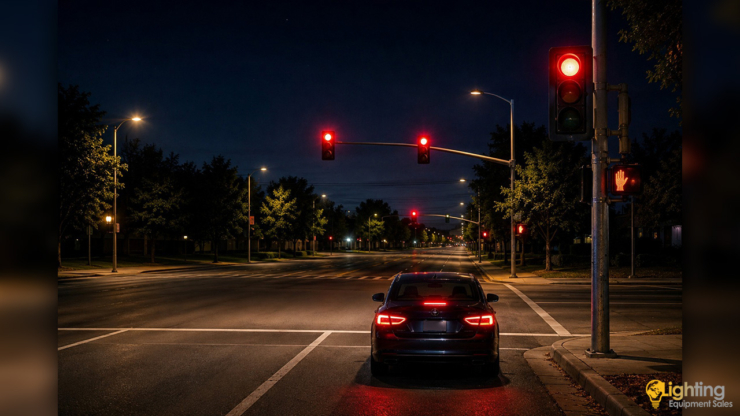
We’ve all been there.
You’re driving home late at night, there’s barely another vehicle on the road, and you find yourself waiting at a red light. You look around, the intersection is empty, yet the signal refuses to change. Naturally, you start wondering:
“Is this traffic light broken?”
In most cases, the answer is no.
Traffic signals don’t always react instantly to approaching vehicles. Depending on how the intersection was designed, the signal may be following a fixed timing plan, waiting for a vehicle detector to register your presence, or giving priority to traffic from another direction.
Understanding how these systems work can make those seemingly unnecessary red lights a lot less mysterious.
One of the biggest misconceptions is that every traffic light “knows” when a car arrives.
The reality is much more complicated.
Some intersections still operate using fixed-time signal plans. These signals change according# to a pre-programmed schedule regardless of whether vehicles are present. They are commonly found in areas with predictable traffic patterns or where installing vehicle detection equipment isn’t practical.
Other intersections are equipped with detection systems that monitor approaching traffic and adjust signal timings in real time. These systems can reduce unnecessary delays and improve traffic flow, but they still have limitations.
Modern intersections use different technologies to detect vehicles.
The most common include:
If your vehicle stops outside the detection zone, or if the detector is temporarily obstructed or requires maintenance, the controller may not recognize that a vehicle is waiting. As a result, the signal could remain red until the next scheduled phase.
This is one reason traffic engineers recommend stopping behind the stop line rather than several meters before it.
Even if your approach has no traffic, the controller must also consider every other movement at the intersection.
Pedestrian crossings may still be active. Another direction may have been given a longer green phase due to heavier traffic. Some intersections also provide priority to buses, emergency vehicles, or coordinated traffic corridors.
What feels like an unnecessary delay from one driver’s perspective is often part of a larger strategy to keep the entire intersection operating safely and efficiently.
Waiting at an empty intersection can certainly be frustrating, but it doesn’t necessarily mean something is wrong.
Traffic signals are designed to balance safety, efficiency, and traffic flow—not simply to change as soon as a single vehicle arrives. Whether an intersection uses fixed timing or advanced vehicle detection, every signal change follows a carefully planned sequence.
The next time you find yourself waiting at an apparently empty intersection, there’s probably more happening behind the scenes than meets the eye.


COMMENTS
MAKE A COMMENT