



RELATED POSTS
Other posts you may be interested in
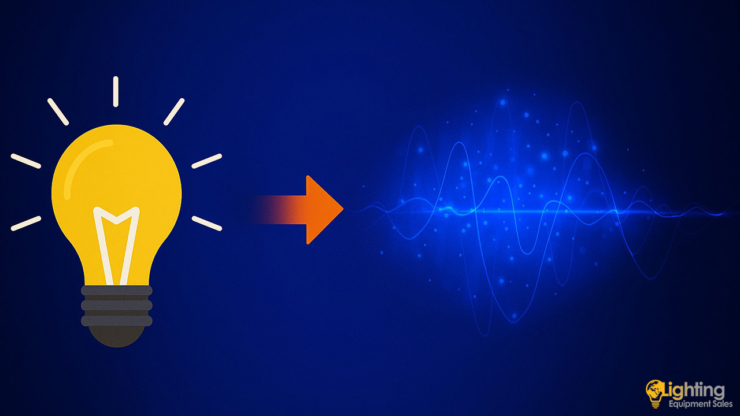
Thanks to the capabilities of modern LEDs, a new form of communication has been developed that uses artificial light as a means of transmitting information. VLC (Visible Light Communication) is an innovative wireless communication technology that utilizes the visible light spectrum (400–700 nm) for data transmission. VLC is an ultra-fast data transmission technology that uses light to send and receive messages over a certain distance. Light travels at 299,792 km per second, which makes it the fastest communication medium.
By replacing radio frequencies with LED or laser light sources, VLC enables both illumination and data transfer. This technology stands out with its advantages such as high speed, security, and immunity to electromagnetic interference. Its operating principle is quite simple: the transmitter, which is an LED or laser diode, converts electrical signals into light signals by blinking at extremely high speeds; the transmission medium is air, and the receiver, which is a photodetector or camera sensor, converts these light signals back into electrical signals to decode the data. This blinking speed cannot be detected by the human eye but can be easily read by the receiving device.
With the advantages it offers, VLC has great potential for use in various fields. Its most prominent features include the ability to transmit data at high speeds, not requiring a license, being resistant to electromagnetic interference, and providing secure communication due to the fact that light cannot pass through walls. However, its inability to penetrate obstacles requires a direct line of sight, its coverage area is limited to the illumination zone of the LED light, and direct sunlight in outdoor environments can cause interference.
As the fastest method of data transmission, VLC is used in smart lighting systems, infrastructure and transportation technologies, the healthcare sector, aviation, and many other areas.



COMMENTS
MAKE A COMMENT