



RELATED POSTS
Other posts you may be interested in
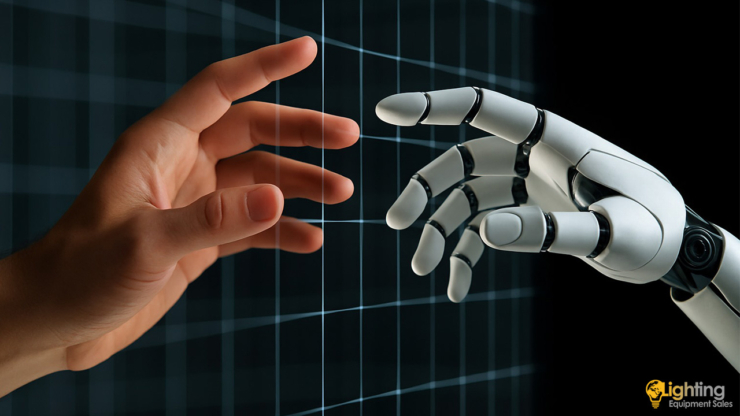
With the Fourth Industrial Revolution, business practices in manufacturing, industry, and many other sectors are rapidly digitalizing. Today, companies aim to integrate new technologies into their processes to deliver higher-quality products and services, reduce costs, minimize potential problems, and complete tasks in a shorter time. One of the most significant technologies that has emerged during this digital transformation is the concept of the Digital Twin.
Thanks to digital twins, businesses can model their physical assets, processes, and systems in a virtual environment, enabling them to develop much more efficient, reliable, and innovative solutions.
Digital twin technology is powered by smart sensors and Internet of Things (IoT) data collected from the physical world. These sensors transfer real-time data to the digital twin. The digital twin then analyzes this data and presents possible outcomes quickly and at low cost. In this way, potential problems can be detected before production begins, and processes can be managed more safely, efficiently, and accurately.
In short, a digital twin acts as a bridge: it ensures continuous data flow between the physical and digital worlds. As data from sensors and IoT devices changes, the digital twin is updated accordingly, always providing real-time information and analysis. This helps businesses accelerate decision-making processes and significantly improve operational efficiency.
The working principle of a digital twin can be summarized in five stages:
The success of a digital twin depends on the integration of three different data sources:
This structure allows digital twins to provide businesses with both real-time visibility and the ability to anticipate future scenarios. As a result, costs are reduced, efficiency increases, and production processes become safer
Manufacturing
By using digital twins of machines, real-time analysis of operations can be performed. This helps reduce maintenance costs and optimize production output.
Automotive
The digital twins of vehicles analyze performance data, contributing to the development of safer and more efficient cars.
Construction
The digital twins of buildings collect real-time data through sensors and wireless technologies. This improves the design quality of projects while also helping to reduce maintenance costs.
Aerospace and Defense
Digital twins are used to enhance product designs and performance. NASA employs digital twins to operate, maintain, and repair systems used in space. Similarly, the U.S. military uses digital twins to verify the integrity of chips and semiconductors in its weapons.
Healthcare
The digital twin of a patient or organ enables doctors to practice procedures in a virtual environment. Additionally, before new drugs and vaccines are released, clinical trials can be simulated with digital twins to ensure safety and effectiveness.




COMMENTS
MAKE A COMMENT