



RELATED POSTS
Other posts you may be interested in
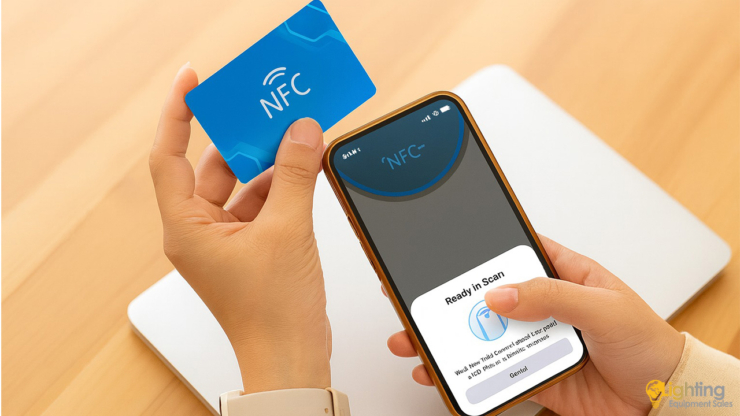
Today, technology makes our lives faster, more practical, and safer. NFC (Near Field Communication) is one of these technologies. Used in areas such as contactless payments, public transportation cards, smart tickets, and data sharing, NFC enables short-range wireless communication, making the user experience easier and more efficient.
NFC is a communication technology that allows two devices to exchange data wirelessly within a distance of 4 cm or less. When devices are brought close together, a magnetic field is created between them, enabling data transfer through this field.
NFC technology has three main operating modes: Reader/Writer Mode, Peer-to-Peer (P2P) Mode, and Card Emulation Mode. These modes allow NFC to adapt to different usage scenarios and be applied in various fields.
Reader/Writer Mode: An NFC device reads or writes data to a passive tag.
Card Emulation Mode: The device acts like a contactless credit card.
Peer-to-Peer Mode: Data is exchanged between two NFC devices.
Passive NFC devices consist of tags and small transmitters that can send information to other NFC devices without requiring a power source. However, they cannot process incoming data from other sources or communicate with other passive components. Interactive signs on walls or advertising boards are common examples of such devices.
Active NFC devices can both send and receive data, and can communicate not only with passive devices but also with other active devices. Smartphones are the most common examples of active NFC devices. Additionally, public transport card readers and contactless payment terminals are also devices equipped with active NFC technology.

COMMENTS
MAKE A COMMENT