



RELATED POSTS
Other posts you may be interested in
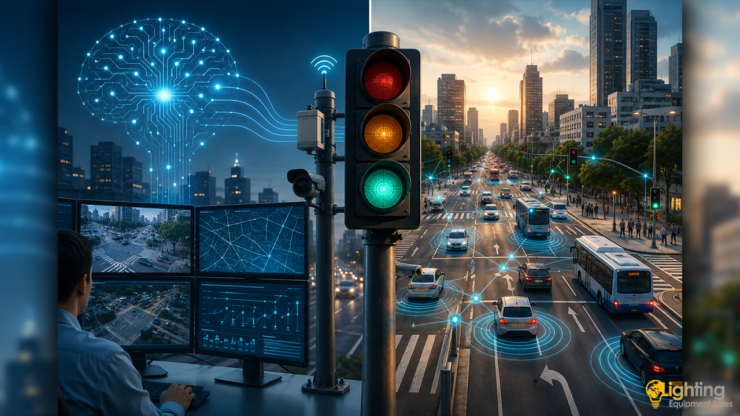
Artificial intelligence is becoming more common in traffic management. One of the most important questions is whether AI can control traffic lights better than humans.
The simple answer is: in many situations, yes. But it depends on the system, the road conditions, and how well the technology is designed.
AI can analyze traffic data faster than humans and make decisions in real time. This makes it useful for busy intersections, city centers, and smart transportation projects.
Traditional traffic lights usually work with fixed timing plans. For example, one road may get green light for a certain number of seconds, even if there are only a few cars waiting.
AI-based traffic lights work differently. They collect data from cameras, sensors, vehicle detectors, and traffic management systems. Then, the AI analyzes this data and adjusts signal timing according to real traffic demand.
This means the system can change green light duration, reduce unnecessary waiting, and respond faster to traffic changes.
AI can process large amounts of traffic data at the same time. It can monitor vehicle density, queue length, pedestrian movement, and traffic flow much faster than a human operator.
For example, if one road suddenly becomes crowded, AI can give more green time to that direction. If another road is empty, it can reduce wasted green time.
This can help cities:
AI can also learn from traffic patterns. Morning rush hour, school times, weekend traffic, and special events can all be analyzed to create better signal control.
Even if AI is powerful, humans are still important in traffic management.
AI can make fast decisions, but human operators are needed to monitor the system, handle unusual situations, and make final decisions when necessary.
For example, road works, accidents, emergency cases, or public events may require human judgment. A well-designed system should not completely remove people from the process. Instead, AI should support human operators and make their work easier.
AI-controlled traffic lights are an important part of smart city systems. In a smart city, traffic signals, cameras, sensors, public transportation systems, and control centers can work together.
This connection helps cities manage traffic more efficiently. It also allows road authorities to use real-time data instead of relying only on fixed schedules.
As cities grow, traffic becomes harder to manage with traditional methods. AI can help create more flexible and responsive transportation systems.
AI can control traffic lights better than humans in many daily traffic situations because it can analyze data quickly and adjust signals in real time.
However, the best solution is not AI alone. The most effective traffic management systems combine AI technology with human experience.
With the right design, AI-controlled traffic lights can reduce congestion, improve safety, and make urban transportation smarter.






COMMENTS
MAKE A COMMENT